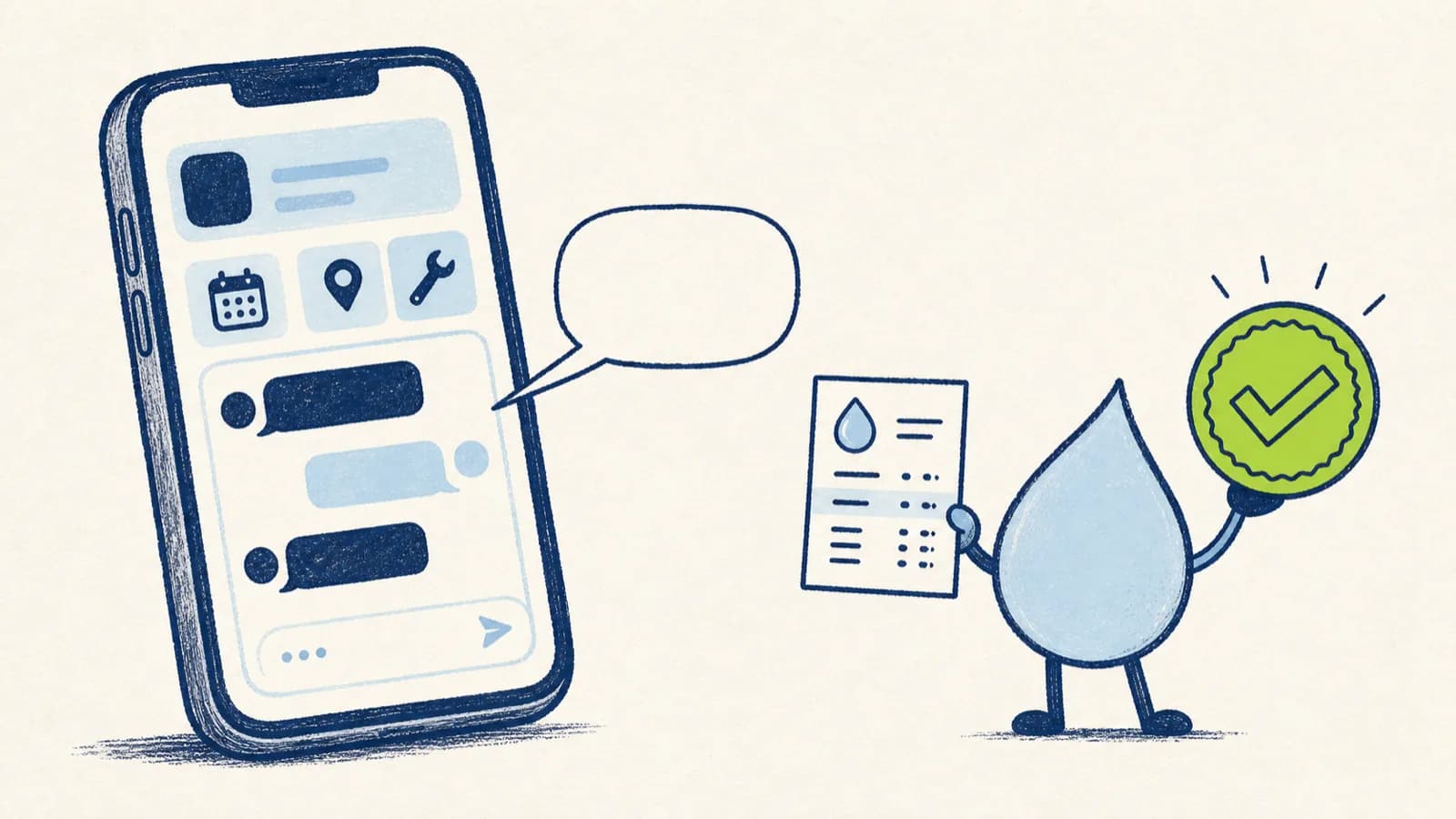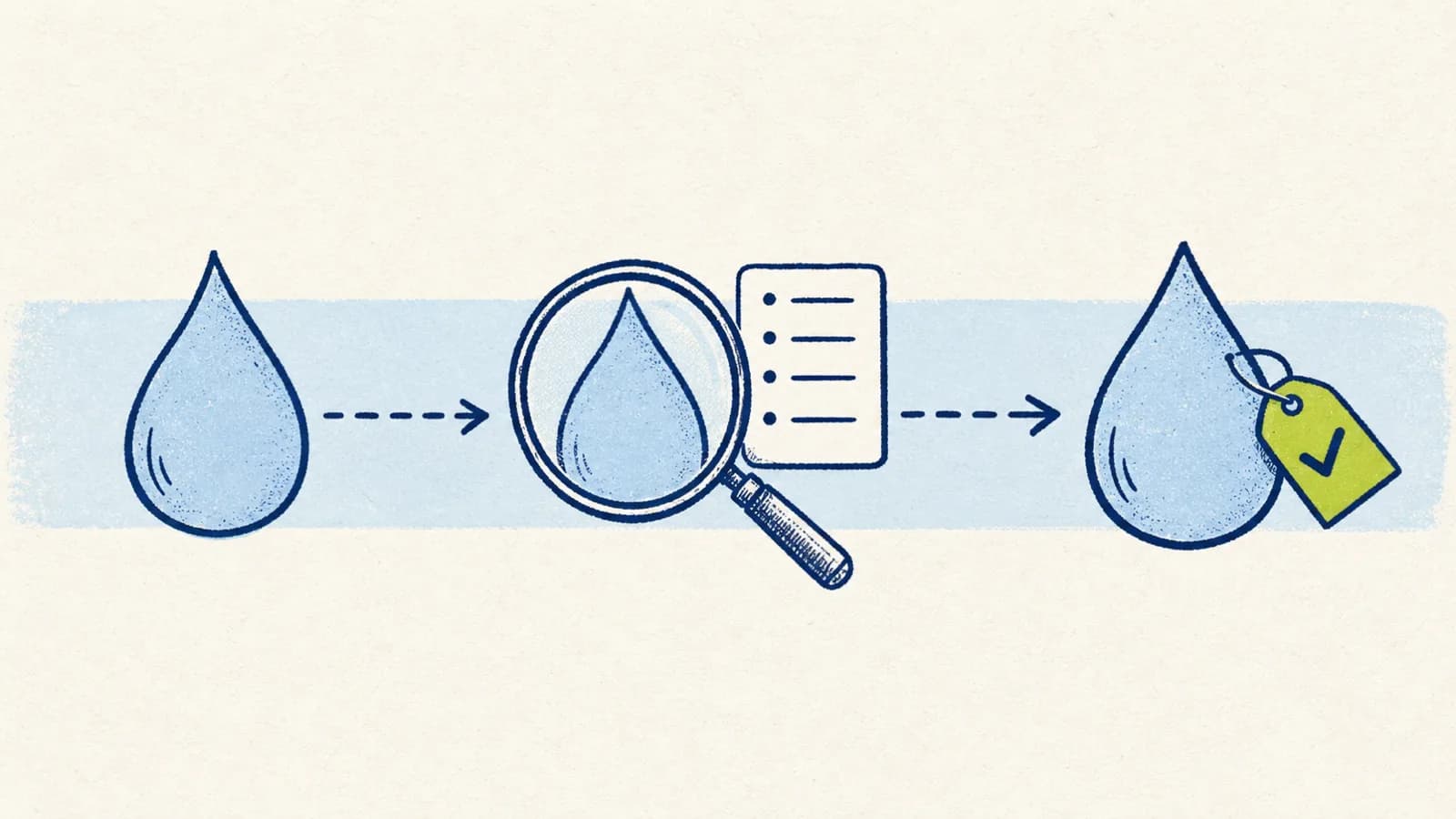
A raw web lead is a name and an email. Someone to chase, cold, tomorrow. A pre-diagnosed lead is a homeowner whose water problem is already identified, whose fitting system is already scoped, and whose in-home test is already on your calendar — with the whole conversation attached. Turning the first into the second is what "qualifying" means for an AI water specialist, and it happens automatically, on every visitor.
What "qualified" means for a water lead
For most tools, a "qualified" lead just means the contact form validated. For a water sale, that's almost worthless — it doesn't tell you whether this homeowner has iron staining or a softener that failed, whether it's urgent, or which system fits. Real qualification answers those questions before your team spends a minute.
The five things it checks
- 1
Identify
Captures what's actually happening — staining, smell, taste, a failed unit — in the homeowner's own words. - 2
Diagnose
Reads the ZIP's real contaminants from EPA data (or the described symptoms for well water) and names the likely problem. - 3
Gauge
Weighs severity and urgency — a health-driven contaminant reads differently than nuisance hardness. - 4
Scope
Matches the problem to a fitting system from your catalog, against NSF/ANSI standards — never a competitor's, never generic. - 5
Book or hand off
Books the in-home test while intent is high, or routes a complex case to your specialist with the full thread attached.
Raw lead vs. pre-diagnosed lead
The difference isn't a nicer form. It's how much your team already knows when the lead lands:
Why pre-diagnosis changes the close
Two things happen when a lead arrives pre-diagnosed. First, your team walks in credible — they already know the water and the likely fix, so the in-home test confirms a plan instead of starting from zero. Second, the homeowner is further down the decision: they've had a specific, sourced conversation about their water, not a generic "we can help." Both raise the odds the test becomes an install.
When it hands off instead
Qualification includes knowing its limits. When the water is unusual, the answer isn't in a source, or the homeowner needs judgment a specialist should make, it hands off — with everything it gathered attached — rather than guessing. That restraint is what keeps a "qualified" lead genuinely qualified, and keeps your brand safe. It's the same principle behind why grounding beats a chatbot's guess.