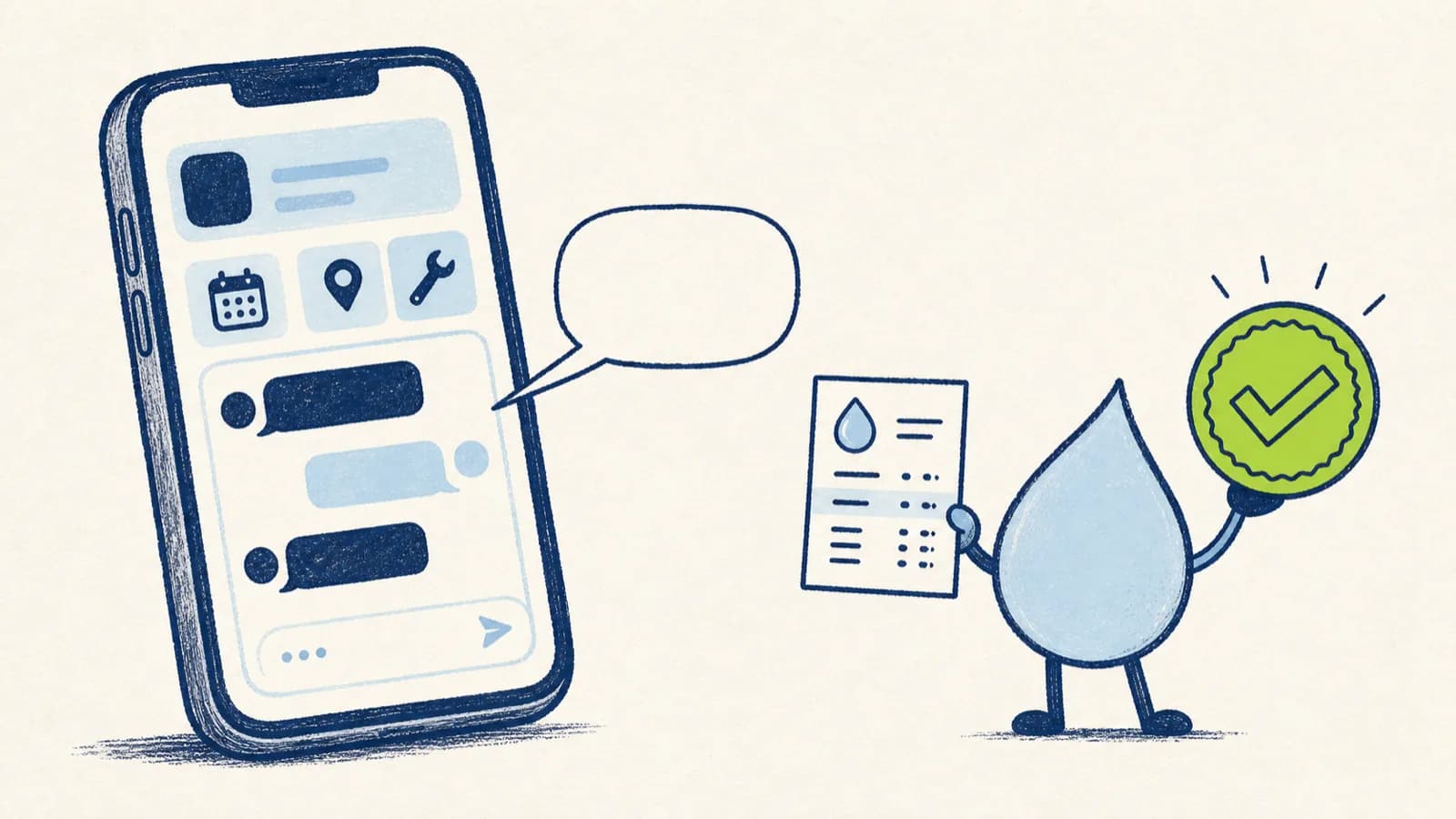
An AI water specialist does what your best salesperson does on a first call — except it never sleeps. It greets every visitor to your website, looks up the real contaminants in their ZIP code from EPA data, explains what they mean in plain language, recommends a system from your catalog only, and books the in-home test. Anything it can't answer with confidence, it hands to your human expert. It is not a chatbot bolted onto a contact form; it's a water-specialist engine that happens to live on your site.
What an AI water specialist actually does
Think of it as four jobs a good specialist does before a lead is ever "qualified," running automatically on every visitor:
- 1
Qualify
Greets each visitor, asks what's going on with their water, and captures the details a technician would want. - 2
Diagnose
Matches the ZIP to the utility and the contaminants actually detected there, then maps the problem to the right treatment. - 3
Recommend
Suggests the fitting system — from your certified catalog only, never a competitor's and never something generic. - 4
Book
Books the in-home test on the spot, and routes anything complex to your specialist with the whole conversation attached.
The output isn't a raw name and email. It's a warm, pre-diagnosed lead: this homeowner, on this ZIP's water, with this likely problem, wants this kind of system, and has an in-home test on your calendar. Your team walks in already knowing the story — here's exactly how it qualifies a lead.
How it's different from a website chatbot
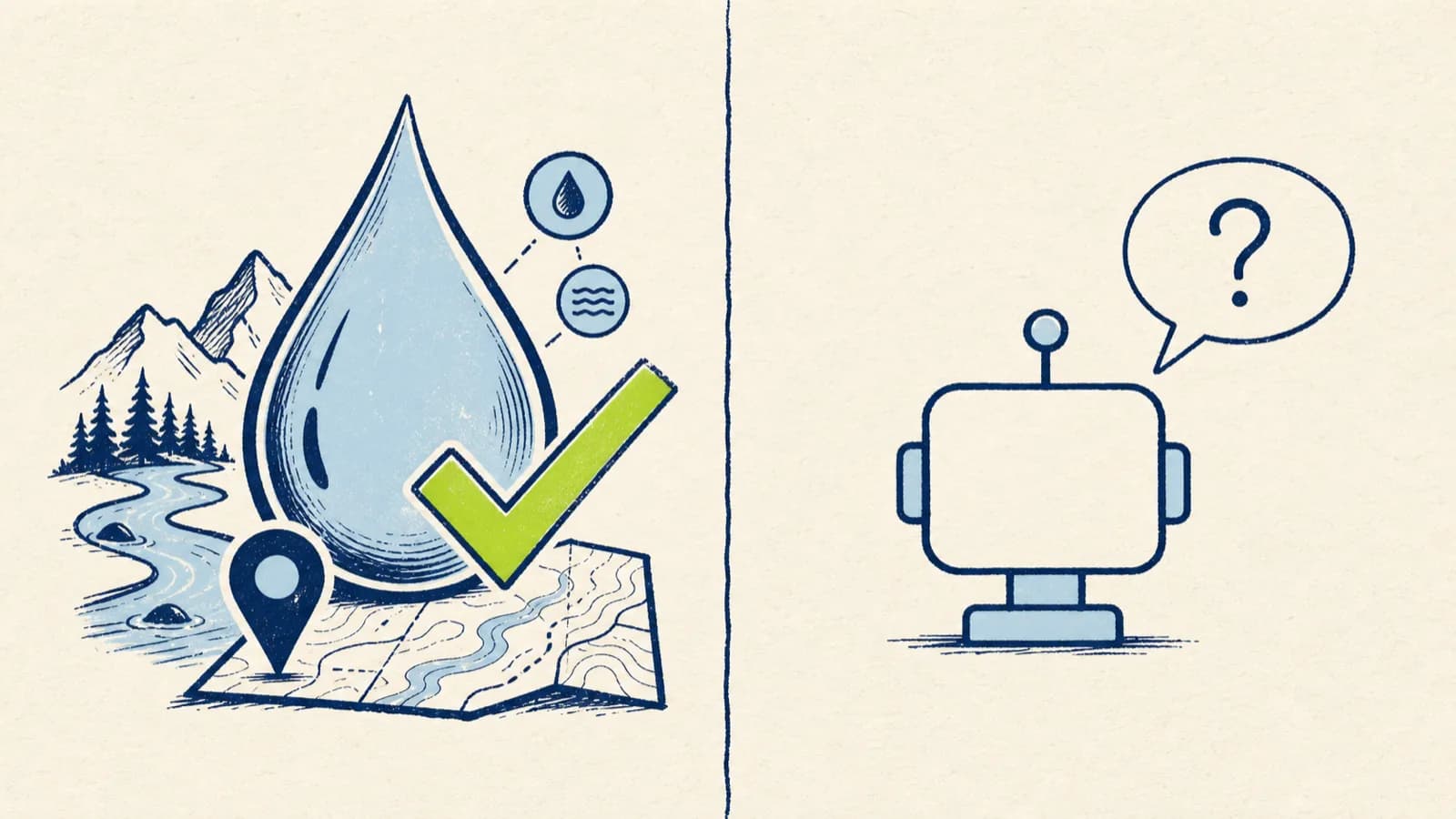
Most "chatbots" are trained on your FAQ. They can tell someone your hours and take a message — "someone will call you back." They have no idea what's in the water, and when they're unsure, they'll happily make something up. That's the opposite of what a water sale needs. (For the full breakdown, see AI water specialist vs. a generic chatbot.)
The difference is grounding. A specialist earns trust by knowing the water and showing its work; a chatbot erodes trust the first time it guesses. For a purchase where a homeowner is deciding whether to let you into their home and spend a few thousand dollars, guessing is disqualifying.
Why water-treatment dealers are adding one now
Two things changed at once: homeowners now start with a search or an AI answer instead of a phone call, and they expect an instant, specific reply. Whoever answers first — with a real diagnosis, not a "we'll get back to you" — usually wins the job.
The average time a business takes to respond to a new web lead. Homeowners don’t wait — they hire whoever answers first.
Source: Harvard Business Review
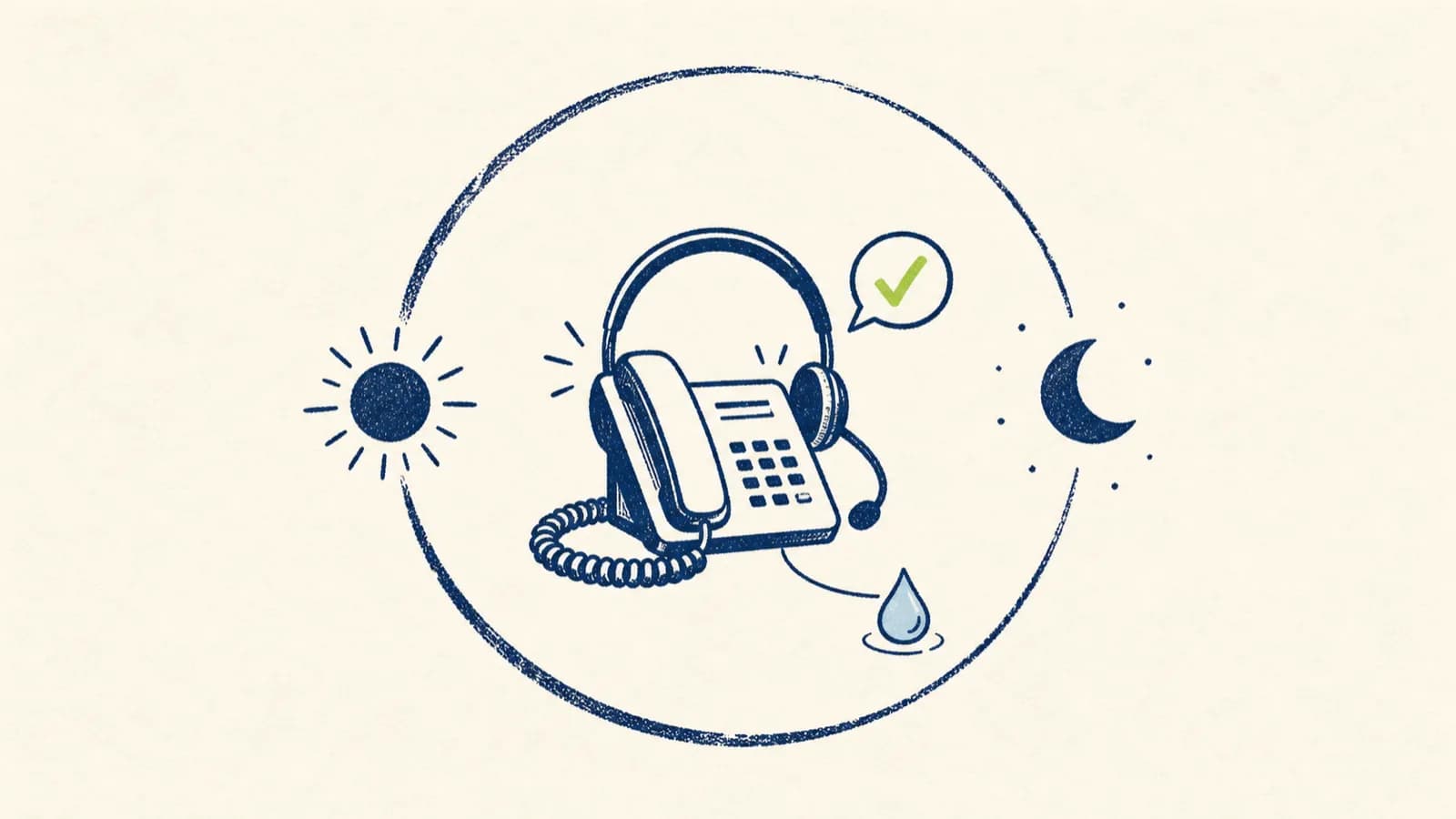
Your best specialist can't be on the chat at 9 p.m., on the weekend, or mid-install. That's exactly when a homeowner reading a scary water headline goes looking for answers — and it's exactly when the direct-to-consumer filter brands are one click away with "skip the salesperson." An AI water specialist closes that gap: it gives the homeowner a real, sourced answer in the moment, and turns the moment into a booked test for your shop instead of a lost lead.
What it won't do
Being clear about the limits is the point. A good AI water specialist:
- Won't replace your expert. It does the qualifying and the homework; your specialist owns the recommendation and the install.
- Won't invent a number. Every limit, standard, capacity, and price is retrieved from a source — never generated.
- Won't sell around you. It recommends from your catalog, feeds your CRM a warm lead, and books the test. It's the front door, not a replacement for your process.
That restraint is what makes it safe to put your brand behind. It's not there to sound impressive — it's there to make sure the homeowner who shows up at 9 p.m. still becomes your customer by morning.