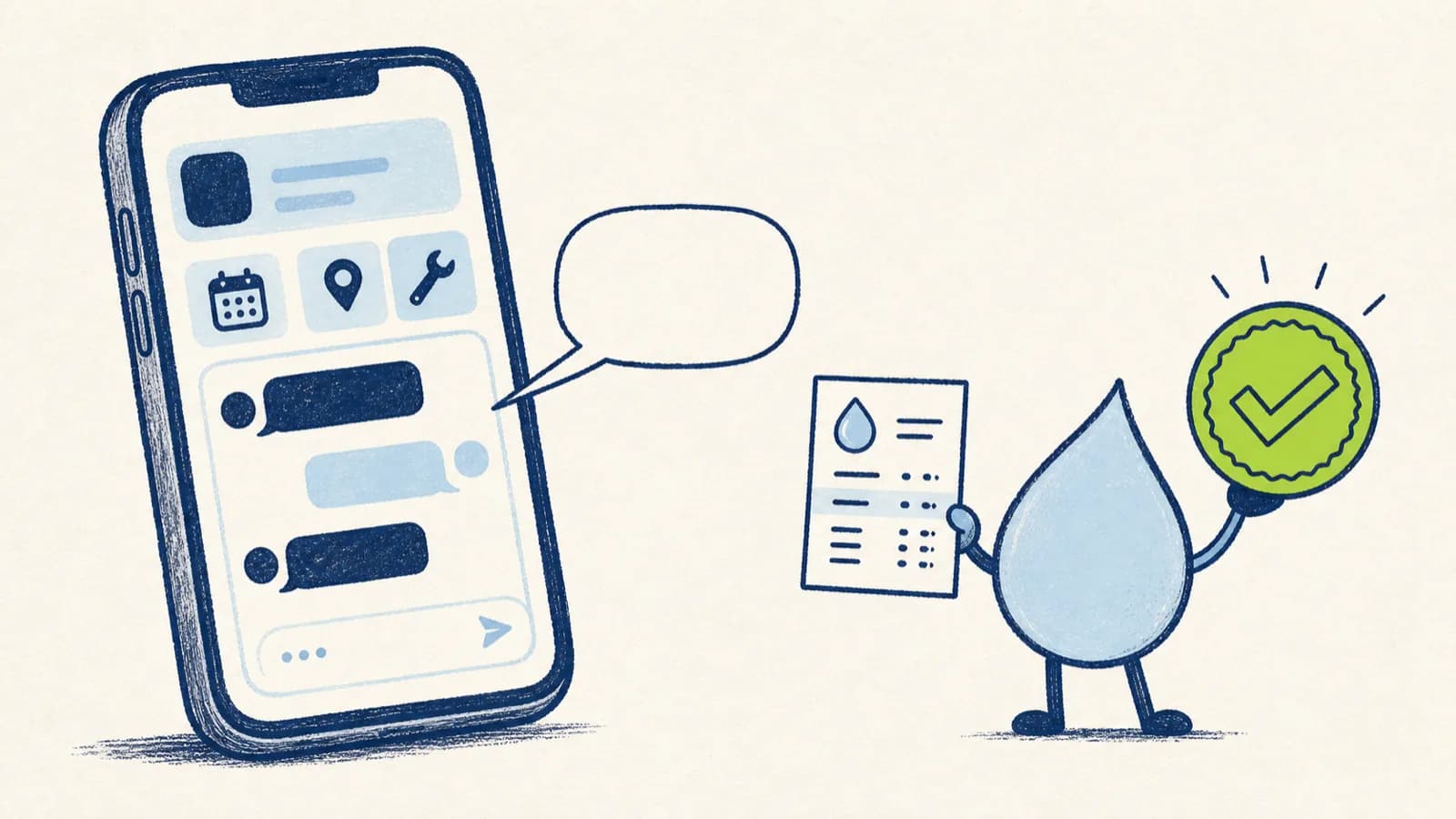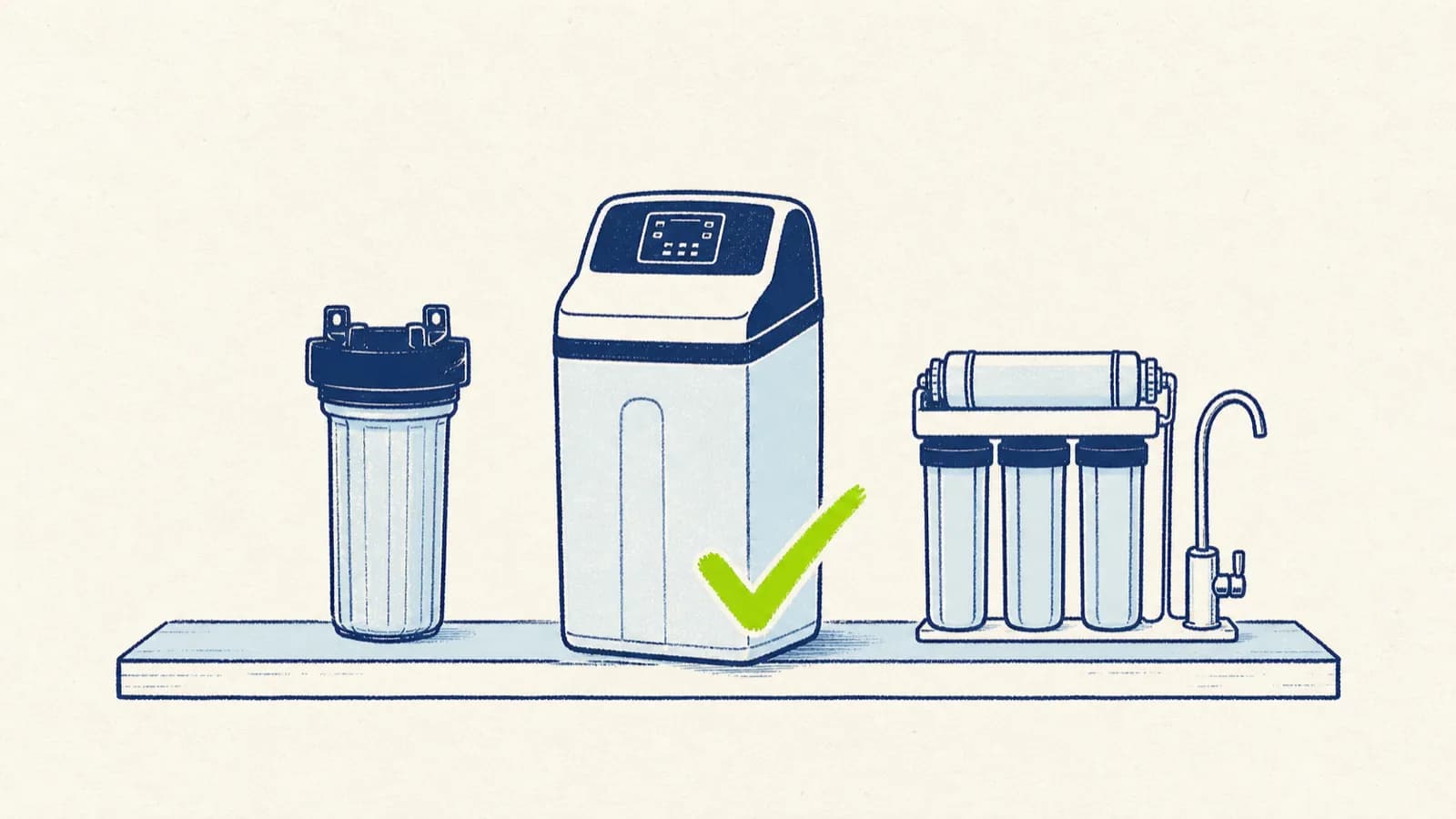
The recommendation is where a water sale is won or lost. Recommend the right system for the right reason and you earn the in-home test; recommend a generic product, a competitor's, or something with an invented spec, and you lose the customer's trust — and your brand takes the hit. A grounded AI water specialist is built so that can't happen: it recommends only from your catalog, only after the diagnosis, and only what it can source.
Diagnosis first, product second
The order matters. A tool that leads with a product is a salesperson in a bad suit — the homeowner feels it. A specialist diagnoses first: what's in the water, how severe, what it will take to treat. Only once that's sealed does a recommendation make sense, because now it's an answer to a problem, not a pitch. The AI water specialist enforces that order every time.
How it matches the problem to your catalog
- 1
Diagnose
Establishes the actual problem from EPA data (or well-water symptoms) — hardness, iron, PFAS, and more. - 2
Filter
Narrows to the systems in your catalog that treat that specific problem — nothing outside what you sell. - 3
Verify
Checks the fit against the relevant NSF/ANSI certification for the job, pulled from the listing. - 4
Present
Recommends the fitting system with the reason and the sourced spec — then books the in-home test.
Why "your catalog only" matters
A generic recommendation engine helps the homeowner and hurts you — it might point them to a product you don't carry, or a competitor's. Configuring the specialist on your catalog means every recommendation is something you stock, install, and service. The customer gets a fitting answer; you get the sale. It's the front door to your business, not a leak out of it.