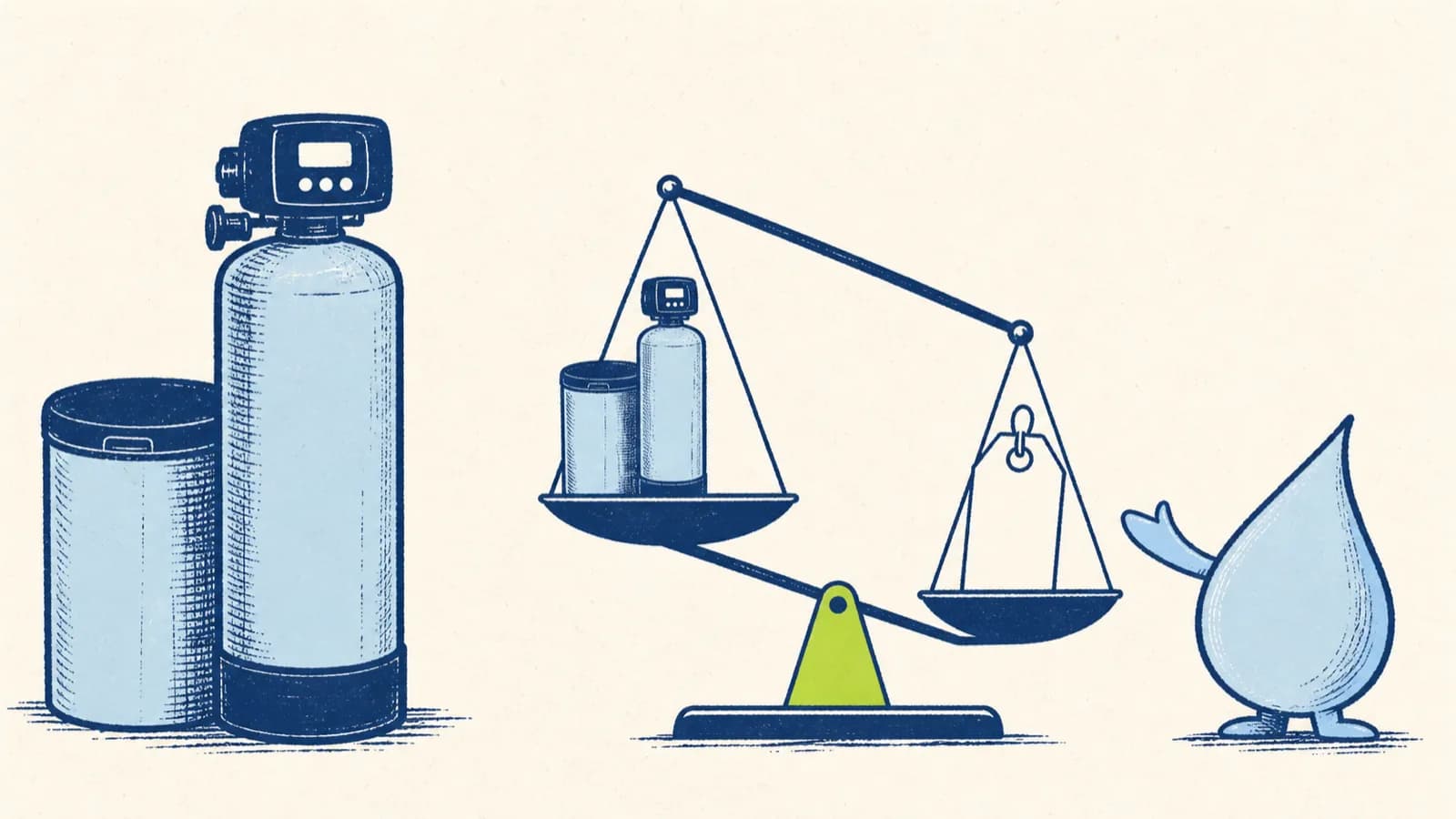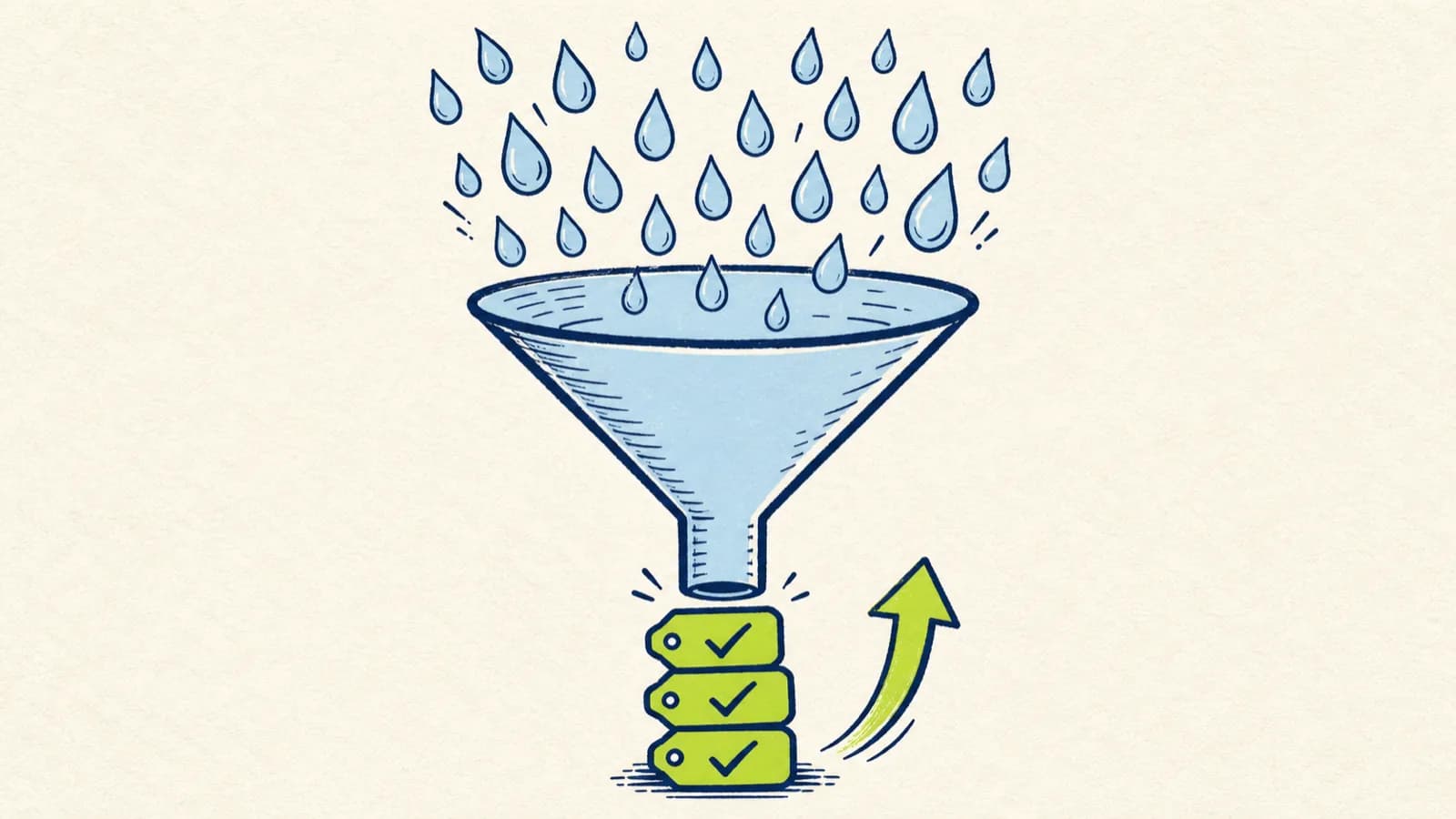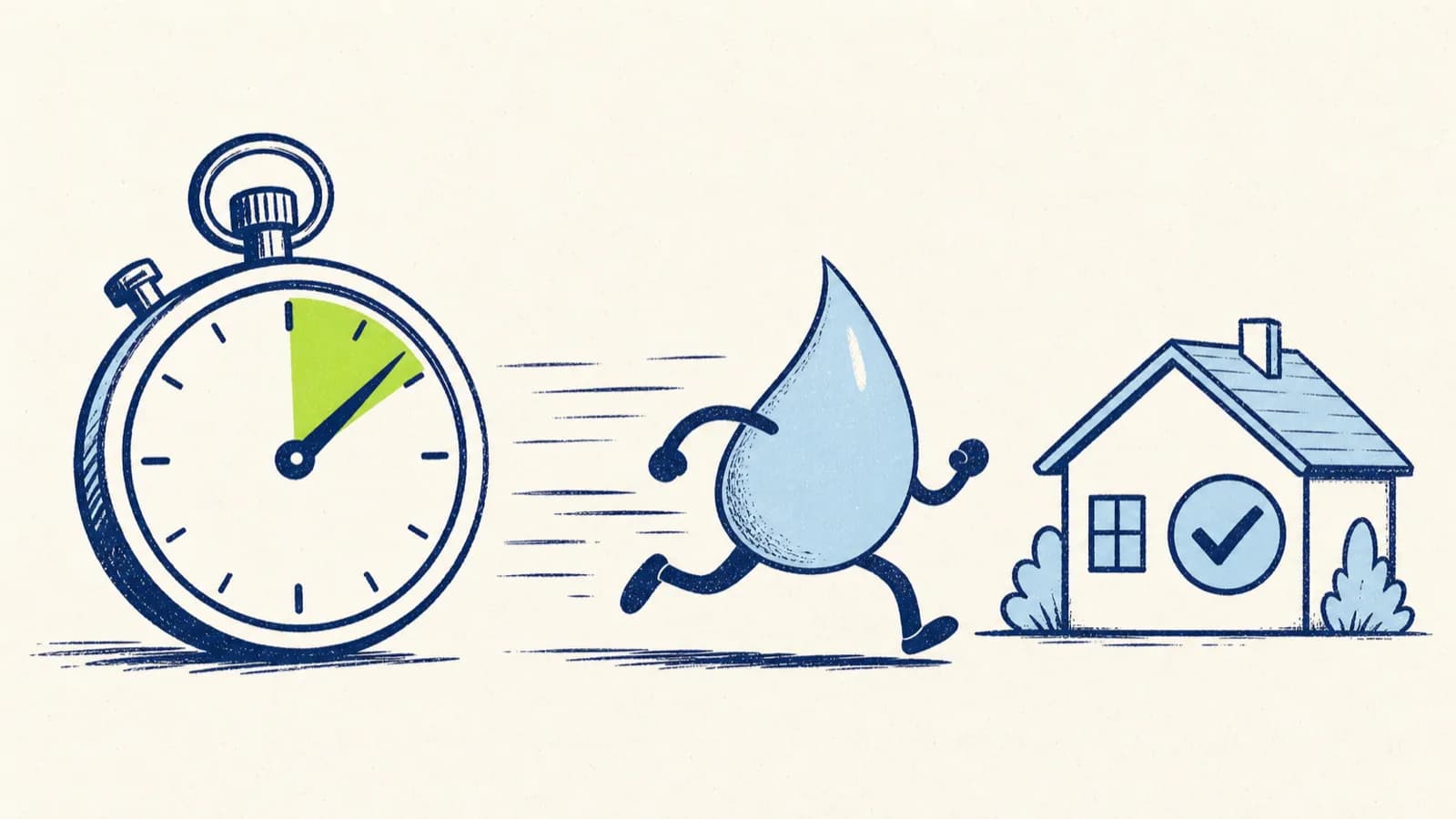
Respond to a new water-treatment inquiry within 5 minutes instead of 30 and you're about 100× more likely to reach the homeowner and 21× more likely to qualify them (MIT/InsideSales, 2007). Wait longer and the odds fall off a cliff — yet the average business takes 42 hours to respond to a web lead (HBR, 2011). In water treatment, where a single lead is a four-figure install — a water softener averages about $3,100 (This Old House, 2026) — that response-time gap is the difference between booking the in-home test and losing the job to whoever answered first. Speed to lead — how fast you make first contact — is the mechanism behind the whole cost of a missed lead.
What is "speed to lead," and why does it decide the sale?
Speed to lead is the time between a homeowner reaching out — a form, a call, a chat — and your first real response. It matters because intent is perishable. A homeowner who just noticed a rusty stain or read a headline about their water is motivated in that moment; an hour later they've moved on, or moved on to a competitor.
The data is unusually consistent for a marketing claim. Two independent studies, run years apart on different data, both found that contact and qualification odds collapse within minutes of the inquiry. That's the mechanism the rest of this guide unpacks — and the reason first contact, not the third follow-up call, is where water-treatment sales are won or lost. It's also the single highest-leverage piece of the broader job of getting more water-treatment leads.
More likely to reach a lead when you respond in 5 minutes vs. 30.
Source: MIT/InsideSales, 2007
Average time a business takes to respond to a new web lead.
Source: HBR, 2011
Share of answered home-services phone leads that convert on the call.
Source: Invoca, 2025
How fast do you really have to respond?
Inside the first five minutes. The MIT/InsideSales analysis of thousands of leads found that responding in 5 minutes rather than 30 made a business about 100× more likely to make contact and 21× more likely to qualify the lead (MIT/InsideSales, 2007). The curve is steepest right at the start — the difference between 5 and 30 minutes matters far more than the difference between one hour and two.
That doesn't mean a human has to answer in five minutes. It means the first response has to — the acknowledgment, the useful answer, the offer to book. If you're weighing where to put effort, put it at minute zero, not in the follow-up sequence.
What happens if you wait 30 minutes? An hour? A day?
The odds decay fast, then keep decaying. The separate Harvard Business Review study of 2,241 companies found that contacting a lead within the first hour made a business more than 60× more likely to qualify it than waiting 24 hours or longer (HBR, 2011). The same study found the average firm took 42 hours to respond — and that 23% never responded at all.
Read those together and the opportunity is obvious: most of your competitors are slow, so even a same-hour reply is a real edge. The homeowner isn't comparing your two-hour response to a perfect one — they're comparing it to the shop that answered in the first ten minutes and the two that never called back.
Two studies, two different findings — often conflated, so worth keeping straight. MIT/InsideSales (2007): respond in 5 vs. 30 minutes → ~100× to contact, 21× to qualify. HBR (2011): the average business waits 42 hours; first-hour contact → 60× more likely to qualify than after a day. Both point the same way: the value is front-loaded into the first minutes and the first hour.
Why does the dealer who responds first usually win?
Because a fast, specific answer ends the search. A homeowner who gets their question answered — "is my water safe?", "what's that stain?" — and an offer to book a test has little reason to keep filling out forms. When a home-services phone lead does get answered, 46% convert on that call (Invoca, 2025); the ones that go to voicemail mostly vanish, since fewer than 3% of voicemail callers leave a message (Invoca, 2024).
You might be wondering whether "speed to lead" is just sales-software marketing dressed up with old studies. It isn't — the two studies here are independent, a decade-plus apart, and both survived being read against their primary sources. The claim isn't that speed replaces skill; it's that skill never gets a turn if a faster competitor already booked the test.
Is speed to lead different for a phone call versus a website form?
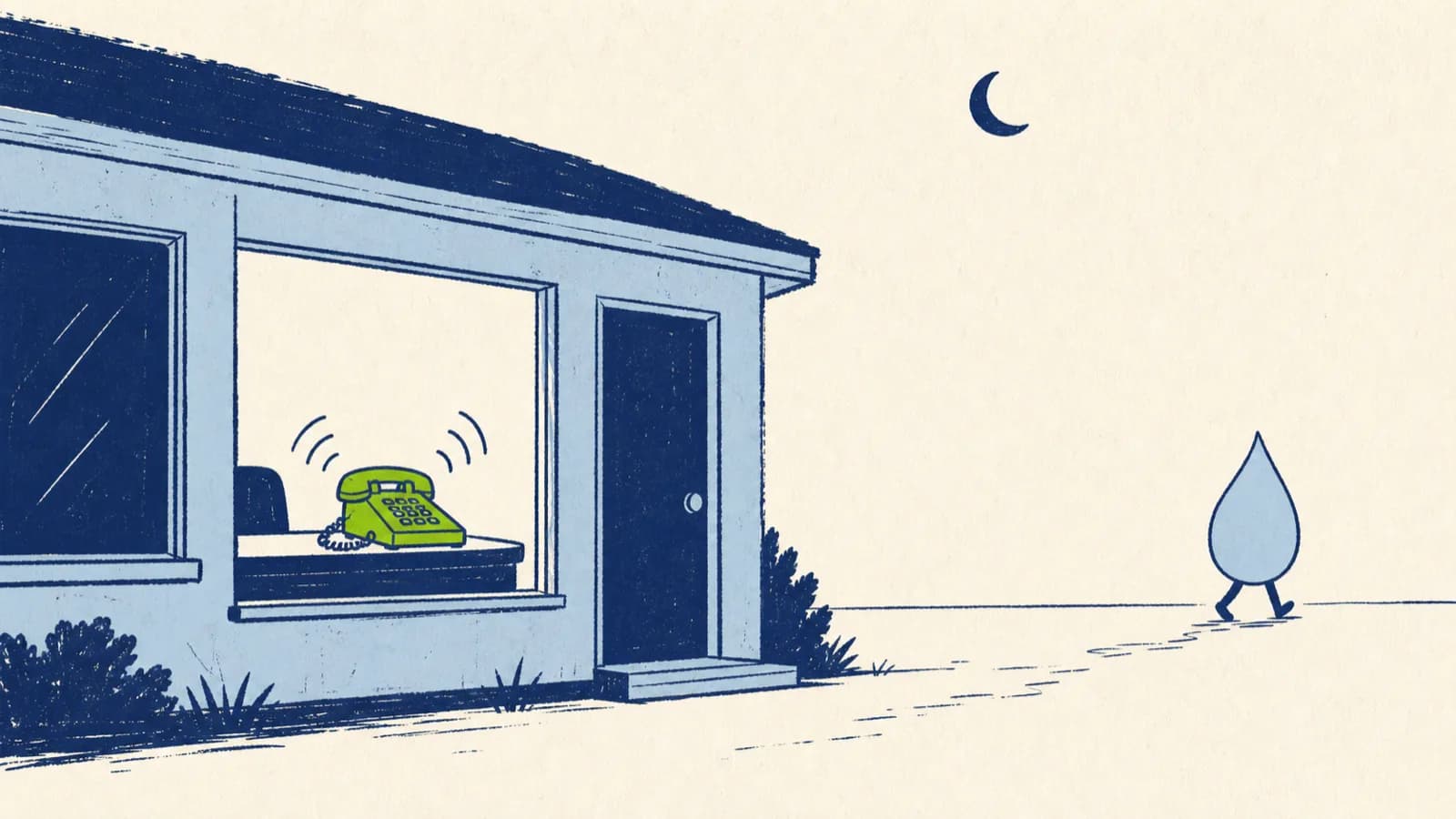
The target is the same; the failure modes differ. Calls leak to voicemail and after-hours silence — about 27% of home-services calls go unanswered (Invoca, 2024). Forms leak to the inbox: a 9 p.m. submission that waits until mid-morning has already aged past the window while the homeowner kept looking.
The fix is channel-specific but the principle isn't: whatever the lead touches first should produce a real response immediately. On the phone that's live answering or missed-call text-back; on the website it's a specialist that can actually reply, not a form that promises a callback.
Can a small dealer respond in five minutes without a night shift?
If your evenings and weekends currently go to voicemail and an unwatched inbox, then yes — but not by working nights. The move is to automate the first touch so it's instant and useful, and let a person take the warm lead later.
- 1
Acknowledge instantly
Every call and form gets an immediate response — a real reply in the moment, 24/7, not a next-day callback. - 2
Answer the water question
Diagnose the ZIP's likely issue in plain language. A specific answer is what holds the lead; "we'll call you" doesn't. - 3
Book the test
Offer the in-home test on the calendar while intent is high — the conversion that matters, not a form fill. - 4
Route to a human
Hand your team the pre-diagnosed lead with the full thread, so the complex conversation starts warm.
On your website, an AI water specialist does exactly this — it answers, qualifies the lead from EPA data, and books the test at 9 p.m. as easily as at 9 a.m. If you already run 24/7 human intake that can diagnose and book, the automation's job shifts to consistency and your website's silent visitors. Either way, the goal is the same: be the response that reaches the homeowner first.
How do you measure — and beat — your own response time?
You can't improve what you don't time. Track the gap between inquiry and first real response, by channel, for a couple of weeks — most dealers are surprised how much of it is measured in hours, not minutes. Then attack the slowest channel first: if forms sit overnight, automate the first reply; if calls hit voicemail after close, add answering or text-back.
The bar to clear is low. Beating a 42-hour average (HBR, 2011) doesn't take a call center — it takes an instant first touch on the channel that's leaking, and a warm handoff to the team you already have.